


Pirelli now testing tyres at up to 500km/h
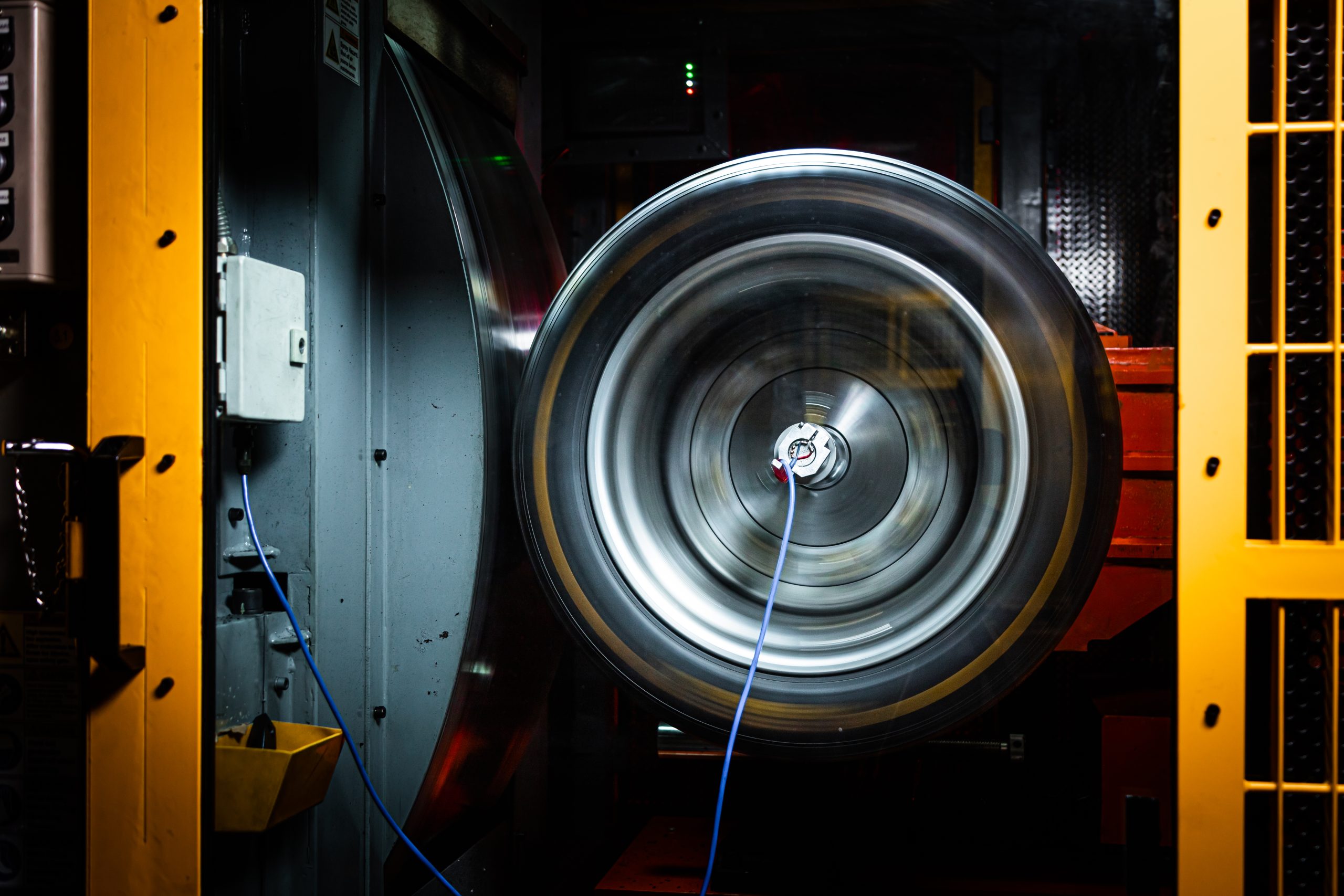
Pirelli has installed a new machine in its research and development department that it claims is capable of testing tyres at speeds of up to 500km/h in controlled conditions.
Known as the High Speed Testing Machine, its main aim is to further improve tyre safety on the world’s fastest cars.
With the arrival of road-going hypercars that are becoming increasingly faster, thanks also to the increased sophistication of the latest electric powerplants, high speeds have become a key factor in the development of different types of tyre: not just those used specifically for motorsport, but also those destined for road use.
The 500km/h High Speed Testing Machine sits alongside two other machines already installed in the indoor testing facility at Pirelli’s Milan Bicocca headquarters in Italy, which are capable of reaching 370 and 450km/h, respectively.
While these two existing machines are normally used for road car tyre tests, the new 500km/h machine is intended mainly for competition use, Pirelli says.
Pirelli adds that its presence as a supplier of more than 350 motorsport events required the introduction of machinery capable of reaching even more extreme limits for products that are used in challenging contexts such as racing, or record attempts with road cars.
In these environments, safety requirements are even more stringent and need to be guaranteed through bespoke testing processes.
According to Pirelli, the High Speed Testing Machine is also capable of managing extremely high torque and acceleration inputs, such as those seen with a hypercar driving on a circuit.
It says the functionality of the High Speed Testing Machine has been designed to evaluate the behaviour of tyres at high speed and to guarantee reliability when it comes to the next stage of outdoor testing.
Thanks to this machine, Pirelli says it’s possible to test tyres as if they were being used on the straights and corners of the Autodromo di Monza or the Nürburgring Nordschleife – but in simulated conditions that are even more severe than those found in reality.
All this in order to ensure the integrity of the tyre over a wide range of usage conditions, with an ample margin of safety.