


Goodyear tyre with 90pc sustainable-material approved for road use
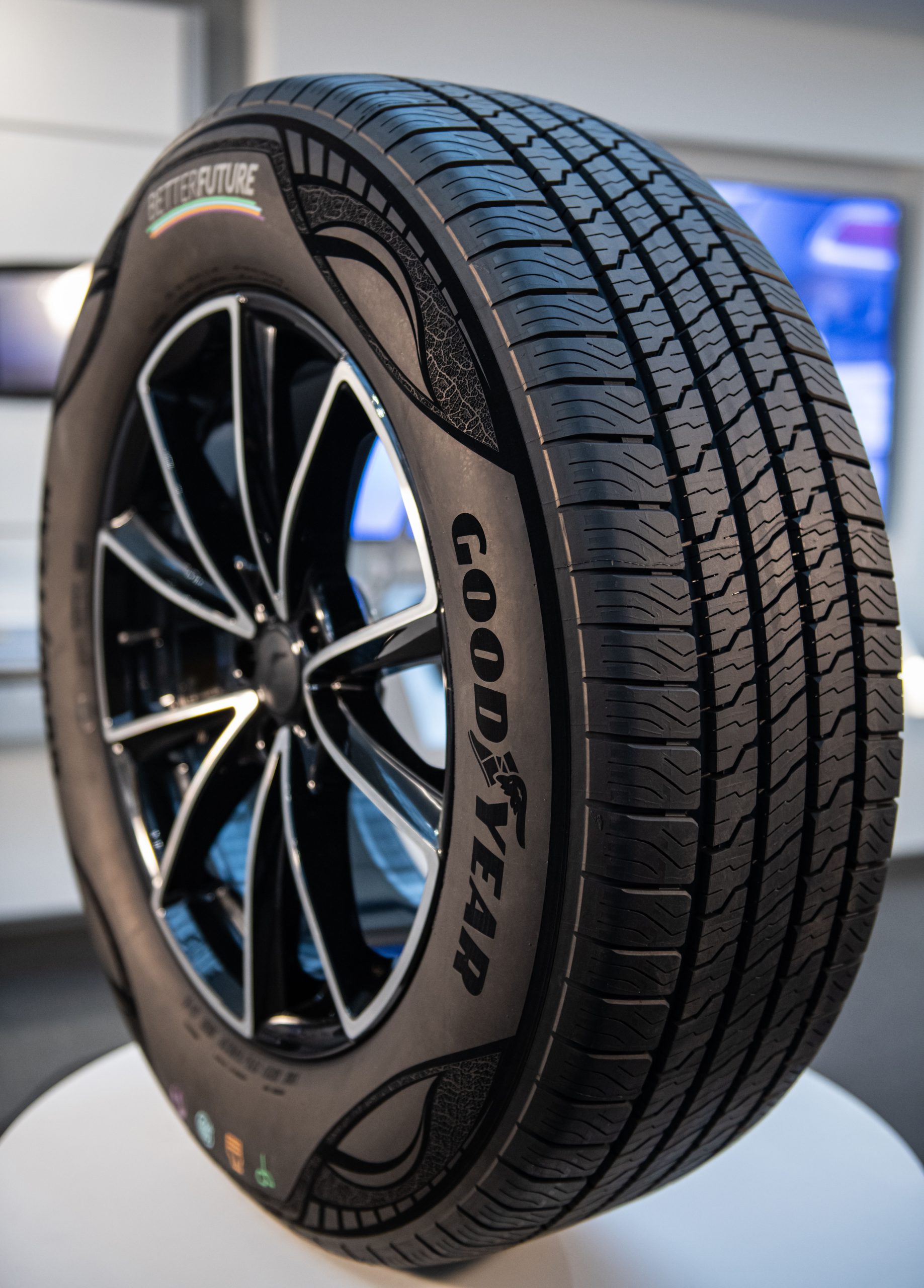
The Goodyear Tire & Rubber Company has unveiled a demonstration tyre comprised of 90 per cent sustainable-materials.
This demonstration tyre has passed all applicable regulatory testing as well as Goodyear’s internal testing, making it suitable for road use.
Goodyear says the tyre also tested to have lower rolling resistance when compared to the reference tyre, made with traditional materials.
In addition, after announcing the capability to demonstrate a 70 per cent sustainable-material tyre in January 2022, Goodyear, working with its supply base, says it plans to introduce a tyre with up to 70 per cent sustainable-material content in 2023.
Goodyear adds that bringing a 90 per cent sustainable-material tyre to market will require further collaboration with the its supply base to identify the scale necessary for these innovative materials to produce that specific tyre at high volumes.
This 90 per cent sustainable-material demonstration tyre includes 17 featured ingredients across 12 different components.
Goodyear’s demonstration tyre features four different types of carbon black that are produced from methane, carbon dioxide, plant-based oil and end-of-life tyre pyrolysis oil feedstocks. These carbon black technologies target reduced carbon emissions, circularity and the use of bio-based carbons, while still delivering on performance.
The use of soybean oil in this demonstration tyre helps keep the tyre’s rubber compound pliable in changing temperatures, according to Goodyear.
Soybean oil is a bio-based resource that helps to reduce Goodyear’s use of petroleum-based products. While nearly 100 per cent of soy protein is used in food/animal feed applications, a significant surplus of oil is left over and available for use in industrial applications.
Silica is an ingredient often used in tyres to help improve grip and reduce fuel consumption. This demonstration tyre includes a high-quality silica produced from rice husk waste residue (RHA silica), a byproduct of rice processing that is often discarded and put into landfills.
Polyester is recycled from post-consumer bottles by reverting the polyester into base chemicals and reforming them into technical grade polyester used in tyre cords.
Resins are used to help improve and enhance tyre traction performance. In this demonstration tyre, traditional petroleum-based resins are replaced with bio-renewable pine tree resins.
Bead wire and steel cords provide reinforcement in the structure of a radial tyre. This demonstration tyre uses bead wire and steel cord from steel with high-recycled content, which is produced using the electric arc furnace (EAF) process. The utilisation of the EAF process allows for steel to be produced with reduced energy use and higher recycled content.
Goodyear says the EAF process has the potential for lower greenhouse gas emissions in comparison with steel produced using a blast furnace. ISCC certified mass balance polymers from bio- and bio-circular feedstock are also included in this tyre.