


Continental offers expert advice on forklift tyres
The full weight of a forklift and its load is absorbed by the tyres. The tyres are the vehicle’s only contact with the ground, so it is crucial the tyres are constantly monitored and safe for use at all times.
When tyre safety is not made a priority for forklifts not only is the vehicle’s fuel efficiency decreased, but more importantly, damage, injury and downtime can arise from unexpected tyre failure.
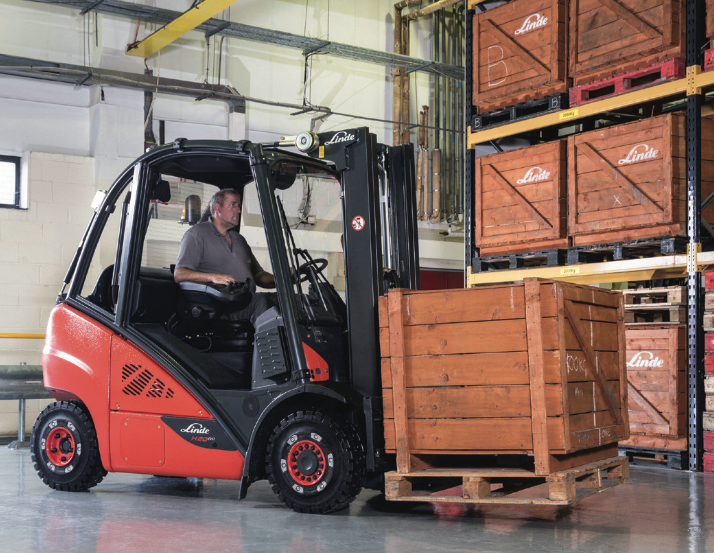
Fitting the right tyre for your forklift’s operations ensures consistent wear, improved traction and stability, particularly at high lift, and demonstrates a duty of care to machine operators and employees in the warehouse setting.
By factoring in whether forklifts are operating in high intensity operations, or by calculating the number of hours per day they will be active, helps to determine your specific tyre requirements.
Working closely with your tyre provider to collect tyre performance data can ensure a more accurate recommendation on which tyre is the best option for your forklift.
When it comes to selecting the right tyres for your operation there are three types of tyres to consider.
The first is solid or super elastic tyres. As the name suggests, these tyres are made of solid material and do not contain air. They consist of a tread with a highly cut and wear resistant compound.
The cushion compound with extreme low damping properties ensures low rolling resistance and low temperature generation.
These tyres are extremely stable, puncture resistant and maintenance-free, have a high load capacity and are an extremely economical choice for counterbalance forklifts in both indoor and outdoor applications.
Second is Press-on-Bands (POB) tyres which are a simple construction consisting of a tread and cushion rubber vulcanised to a steel band.
This structure provides good heat dissipation (via the steel ring) and the best possible adhesion of rubber to steel. Even under full utilisation of their speed and load potential, they have outstanding mileage performance.
The powerful steel ring means easy fitting. POBs offer high lifting capacity in small wheel sizes making them ideal for use on narrow aisle forklifts.
Finally, there are pneumatic tyres, these tyres are more suited to travelling at higher speeds over longer distances, for example in a large yard area, however, they can be vulnerable to punctures.
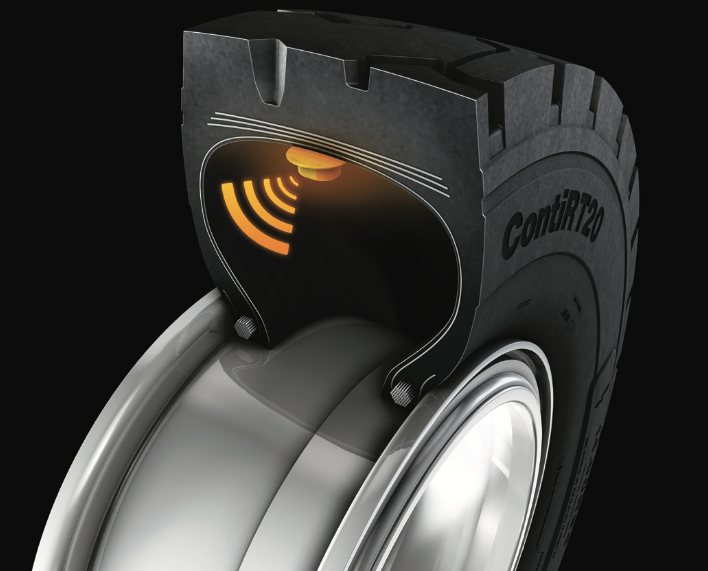
To maintain tyre pressures and reduce punctures in these types of tyres, tyre pressure monitoring systems (TPMS) such as Continental ContiPressureCheck are invaluable.
Quality approved, provides peace of mind
Fitting quality, premium tyres on your forklift truck can have a hugely positive impact, not only on warehouse productivity, but more importantly on safety too.
Premium tyres are a sound investment for forklift operators, where higher throughput means higher productivity, less downtime and increased safety.
Cheaper tyres tend not to have such advanced compounds and often wear more quickly and less evenly, so can result in tyre failure and the risks associated with this.
Furthermore, they typically need replacing more frequently increasing downtime and maintenance costs, and this results in a less cost-effective option in the long term.
Continental super-elastic tyres, for example, are approved as Original Equipment (OE) on many leading forklift manufacturers’ machines.
These premium tyres offer additional safety features including sidewall protection, where the tread compound is used to cover the sidewalls to reduce the chance of separation and impact damage.
Don’t compromise on stability
Tilting stability should also be factored in as a potential risk, especially for forklift trucks completing high level stacking, an operation which can cause your forklifts to shake if stability is compromised.
This instability can occur if the tyres are overheating or in poor condition, and forklift truck manufacturers carry out extensive tilt and stability testing on their machines using only OE approved tyres to test their capabilities in these circumstances.
For this reason, many operators will only use premium OE approved tyres throughout the duration of the vehicle’s useful life to guarantee optimum safety.
Keeping the heat off is key
When it comes to tyre rubber, heat build-up can be problematic, especially in high demand forklift applications, where heat can be a significant risk factor.
Tyres on these types of vehicles need sufficient cooling time, otherwise they can quickly overheat causing degradation of the rubber.
This can cause the tyre to separate from the rim, compromising the vehicle’s stability which can lead to the vehicle behaving erratically, as if a wheel is missing, which of course is extremely dangerous for the forklift operator and other staff in close proximity.
The advanced compounds used in premium tyres like Continental’s, make the tyres better equipped to withstand heat build-up than cheaper tyres – which is why they are recommended for busy, high demand operations.
However, to ensure the utmost safety and longevity of your tyres, wherever possible forklift tyres should be allowed to cool down for the duration of one shift, meaning seven to eight hours.
Damage from heat build-up occurs over time and a forklift operator should look out for signs of excessive wear or damage. Therefore, frequent checks of your tyres and other forklift components during high demand periods are recommended to alleviate any potential incidents.
Understand forklift requirements and keep in check
Understanding your operation and the demands placed on your forklifts and their tyres can ensure they perform to the highest level.
Frequent and thorough examination of forklifts for damage and wear, as well as regular monitoring of their tyres is crucial to ensuring a safer warehouse operation. This in turn will save you money and deliver greater productivity, every day.