


TyreSafe asks motorists, do you drive and hope?
TyreSafe, the UK tyre safety charity is challenging drivers this spring with the question: do you drive and hope?
With the weather set to remain unpredictable, and vehicles likely to be more heavily loaded, TyreSafe is asking drivers to not take a chance on their tyre safety by performing regular checks every month and before long journeys.
The question ‘do you drive and hope?’ is a bold but important question for motorists who may not even give any consideration to their tyres as the only point of contact between the vehicle and the road.
With longer, heavily loaded journeys more likely this time of year, TyreSafe is also urging all motorists to ensure they have adequate breakdown cover, and in the event that they experience a tyre related incident on a motorway or dual carriageway do not attempt to replace or repair the tyre. Step away from the vehicle to a safe place and await assistance. On all other roads only change or repair a tyre if it is safe to do so.
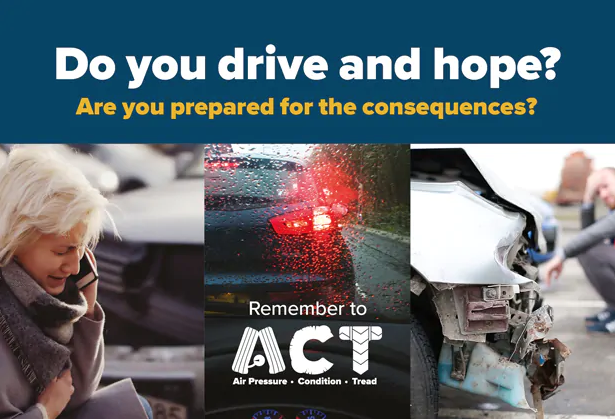
To help drivers remember the three vital checks, TyreSafe uses the acronym ACT – air pressure, condition and tread.
Air pressure – The air pressure of each tyre should also be checked using an accurate gauge. Typically, car manufacturers recommend two different tyre pressures, one for light loads and another for when the vehicle is fully. It’s essential that drivers adjust the pressures to accommodate the load they are carrying. These settings can be found in the vehicle handbook, on reputable internet tyre pressure charts such as the one at tyresafe.org, and often in the vehicle’s fuel filler cap or door sill.
Condition – with a visual check, looking at the overall condition of each tyre to see if anything might have penetrated the tread, such as nails or other objects. If any of these objects, cracks or bulges are present, the driver should refer immediately seek professional advice.
Tread – drivers should check the tread of their tyres to ensure they are above the legal tread depth minimum of 1.6mm. Ideally an accurate tread depth gauge should be used but if this is not available, a €1 coin can be used as a guide. Insert the coin into the main sections of the tyre and at various points around the circumference – should you see the outer rim at any point, you need to have the tread depth checked as it may be illegal.
TyreSafe provides a wealth of resources, guidance and instructional videos to further assist drivers in performing checks on their tyres at home. These can be found at www.tyresafe.org/checks and on TyreSafe’s YouTube channel.
They also supply their members and supporters with a suite of assets to share with their customers to help further spread the tyre safety message.